
For Haji Thebo, the election brought him back to the polls after years away.
For Lawanda Carraway, it was a chance to demand change as everyday expenses climbed and immigration enforcement raised concerns.

Their explanations offer a glimpse into the motivations behind an election that broke decades of Republican success in Texas.
Democrat Gina Hinojosa defeated Republican Gov. Greg Abbott, while Democrat James Talarico defeated Republican Ken Paxton for a U.S. Senate seat. Before Tuesday, Texas had not elected a Democratic governor since Ann Richards in 1990 or a Democratic U.S. senator since Lloyd Bentsen in 1988.
In conversations with KPRC 2 in downtown Houston Wednesday, voters described concerns about affordability, the war in Iran, immigration enforcement and the direction of government.
Most people who agreed to speak welcomed the results. Those interviews in Democratic-leaning Harris County, however, offer a limited snapshot of voters’ opinions.
“We’ve been living like, you know, everything’s overpriced,” Carraway said.
Asked what motivated her vote, she pointed to affordability and immigration. She said she wanted people treated humanely.
“I hope that it means that we’re going to return the world to decency and treating people like human beings,” she said.
For Thebo, the war in Iran was a major reason to vote.
“I’m not for it. I am against it,” he said.

He also expressed concern about immigration enforcement. But encouragement from his girlfriend and co-workers helped turn his concerns into a trip to the polls.
“I rarely ever voted, but my girlfriend was voting, my coworkers were all voting,” Thebo said. “It was just such a vibe that this is the urge and this is a need and the time to do it.”
He said he last voted in a Bernie Sanders presidential primary. After seeing Tuesday’s results, he said, “It feels like I’m walking on clouds.”
Another voter, Isaac Abraham, said financial pressures motivated him.
“Because my gas is high, my property tax is increasing, so I needed to vote,” he said.

He also pointed to immigration enforcement and President Donald Trump’s policies when explaining his reaction to the results.
Data analyst Steven David said he believes the gains reflected a combination of independents supporting Democrats, people crossing party lines and voters returning after sitting out previous elections.
“I think the most important voter that we found out was the independent,” David said.
David described those voters as people who do not participate in Republican or Democratic primaries. Primary participation alone does not establish someone’s political views, and individual ballots remain private.
David said conclusions about crossover voting rely on broader turnout patterns and election results.
“So I won’t be able to see who they voted for. But we can make inferences, right?” he said.
He also pointed to a shift toward Democrats in suburban communities that have traditionally favored Republicans.
Another surprise, David said, was the extent to which voters supported Democrats farther down the ballot.
“What we were underestimating, to be honest, was how motivated people were to pick Democrats and pick Democrats completely down the line,” he said.
David said his early-voting analysis found that 41% of Harris County’s early voters were 65 or older. The complete Election Day voter breakdown was still pending when KPRC 2 interviewed him Wednesday.
He credited Democratic candidates with directly addressing financial concerns, including the cost of groceries and gasoline.
“They spoke to those things, and I think they spoke to them both in a rational way, as well as a calm and measured way,” David said.
David said Republicans’ emphasis on culture war issues, including transgender athletes and Sharia law, failed to connect with voters facing rising everyday costs. He believes those familiar campaign themes had lost their effectiveness as financial pressures became more urgent.
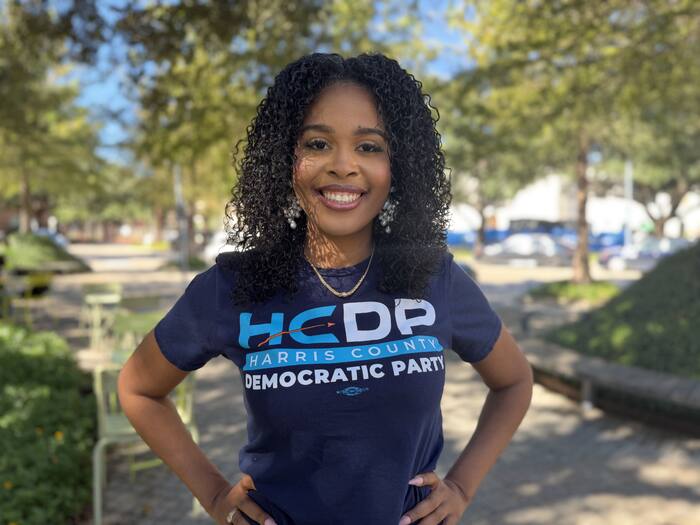
Harris County Democratic Party Chair Traci Gibson said her organization focused on getting its supporters to vote through direct outreach tailored to different communities.
“I think the past has been a one-size-message-fits-all, and that’s something I’ve been preaching adamantly against,” Gibson said.

She described visits to barbershops, conversations with Black men, church appearances and events designed to engage younger people. The party also operated four field offices, she said.
“We had to make sure we were in these very big communities that usually don’t hear from the party,” Gibson said.
The goal was to connect each race to the concerns people were experiencing in their daily lives.
“We made sure that every community, their issues matter, that we talk to them about them and that we showed how each race directly impacted their lives,” she said. “And so I think that made a huge difference.”
Gibson said she saw strong participation among Black voters in Acres Homes, Sunnyside and the Tidwell area. She also credited Hispanic and young voters. At the local party level, Gibson said, the emphasis was on motivating people who already supported Democrats.
“We went to the base. We tried to turn out Democrats,” she said.
That effort included text messages, phone calls, digital advertising and television commercials, Gibson said.
Affordability was a recurring concern, along with education, health care and opposition to school vouchers.
“Daycare costs the same as rent,” Gibson said. “That’s a problem for everyone.”
A Facebook question posted by KPRC late Tuesday drew more than 2,000 replies asking what motivated support for Talarico or Hinojosa.
Among the comments reviewed, public education repeatedly surfaced, including school funding, support for teachers and opposition to vouchers.
Other recurring themes included common decency, frustration with Republican leadership, living costs, reproductive rights and immigration enforcement.
The replies were voluntary responses to an informal question and do not establish how common those views were among Texas voters overall.
People who opposed the candidates also responded. Some expressed concerns about higher taxes and living costs, disagreed with their social policies or doubted their campaign promises. Others said they preferred Republican candidates or distrusted both parties.
KPRC 2 requested comment from the Texas Republican Party and Harris County Republican Party about their assessment of the results and plans for future elections. Neither had responded by publication.
Gibson said Democrats must maintain their community presence between elections.
“We can’t show up in October asking for votes,” she said. “They had to have already seen us.”
David said both parties have more work ahead to understand the results: Republicans to assess their losses and Democrats to determine which efforts they can repeat.
For voters, the next test will be whether the candidates they elected address the concerns that brought them to the polls.


